AI Is Already in Our Kids’ Lives. The Question Is: What Kind of AI Are We Letting Them Use?
Notes by SDG ·
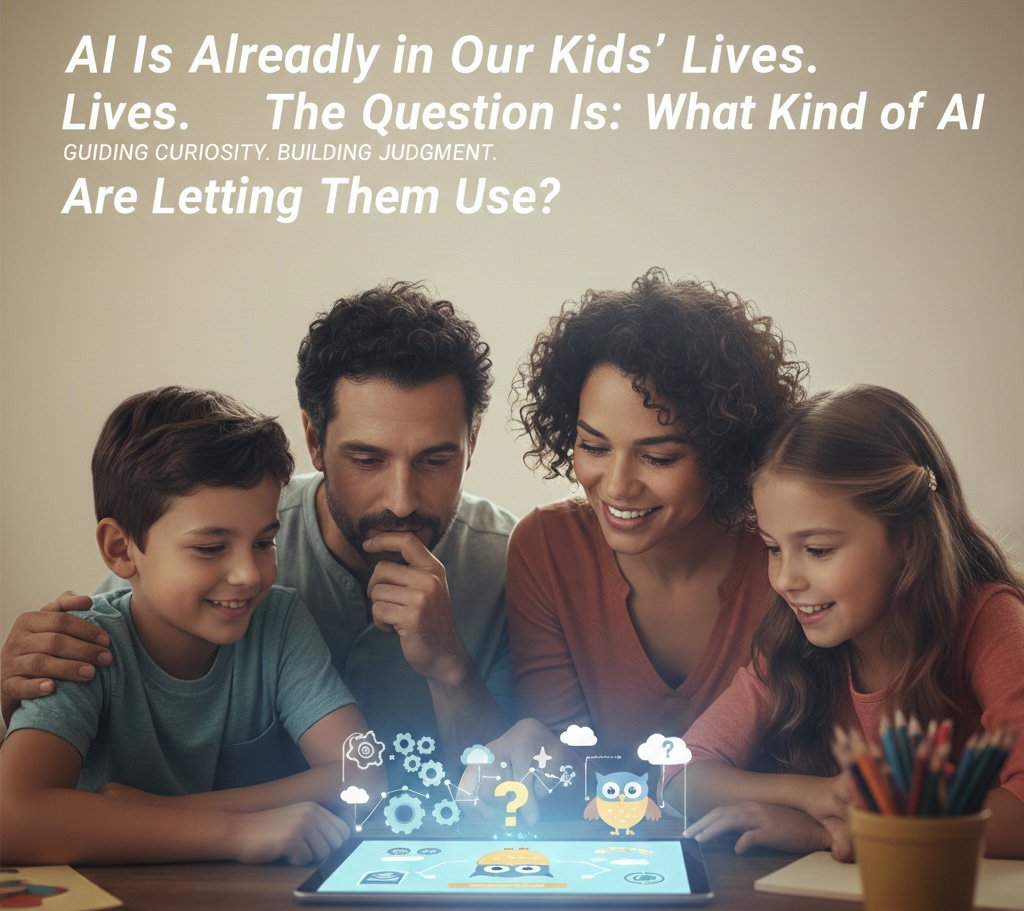
Many parents feel uneasy about AI.
Concerns about shortcuts, dependency, safety, and misuse are real—and justified. No parent wants technology to replace thinking, curiosity, or effort.
That’s why many families assume that keeping AI “out of school” or “out of reach” is enough.
But here’s the reality most parents don’t realize:
AI is already part of children’s daily learning environments.
Open Google Search today and AI-generated answers appear by default. These responses:
- Are not grade-specific
- Are not designed for kids
- Often give direct answers without explanation, reasoning, or context
This means children are already interacting with AI—just not in ways that were built for them.
The Real Risk Isn’t AI. It’s How AI Is Used.
The biggest danger isn’t exposure to AI itself.
The danger is when AI replaces thinking instead of supporting it.
When tools deliver instant answers (including Online Search)
- Kids skip the struggle that builds understanding
- Reasoning muscles weaken
- Learning becomes passive instead of active
Over time, this can lead to something deeper than academic issues: cognitive atrophy. Not because kids aren’t capable—but because the tools never ask them to be.
At the Same Time, Our Kids Are AI-Native
Today’s students are growing up alongside AI.
As intelligence becomes cheaper and more accessible through technology, the most important skill won’t be knowing the answer—it will be judgment.
Judgment means:
- Questioning AI outputs
- Evaluating whether something makes sense
- Recognizing gaps, errors, or oversimplifications
- Knowing when to trust a response and when to dig deeper
That kind of judgment doesn’t develop by avoiding AI altogether.
It develops through guided, intentional use.
Shielding Kids Isn’t the Same as Teaching Them
Completely shielding children from AI may feel protective—but it also leaves them unprepared.
They will still encounter AI:
- Through search engines
- Through homework tools
- Through friends and devices
Without guidance, they learn from tools that prioritize speed and answers—not thinking.
This perspective didn’t come from theory alone. It emerged through hands-on research and real experimentation while building and testing AI tools designed specifically for children—starting with one child at home. That process made one thing clear: how an AI tool is designed matters far more than whether AI is used at all.
That realization reframes the question parents need to ask.
Why Intentional, Kid-Designed AI Matters
There’s a growing difference between:
- General-purpose AI built for adults
- AI tools intentionally designed for children’s learning and development
Tools built intentionally for kids are designed to:
- Slow students down instead of rushing them
- Ask follow-up questions instead of giving final answers
- Adapt responses by grade level
- Guide thinking rather than replace it
They are not answer engines.
They are not homework solvers.
They do not replace teachers or parents.
They act as thinking companions—tools that encourage curiosity, reasoning, and reflection.
What Parents Can Do Right Now
Parents don’t need to wait for policies or mandates to make thoughtful choices.
They can:
- Be aware that mainstream tools already expose kids to AI
- Look beyond convenience and ask how a tool shapes thinking
- Choose apps and platforms built intentionally for children
- Prioritize tools that promote questioning, not copying
AI isn’t going away.
Avoiding it entirely isn’t realistic.
But choosing the right kind of AI for kids is possible.
And that choice can make the difference between a generation that relies on answers—and one that learns how to think.