I Launched a Weekly Newspaper. Here’s Why and How.
Notes by SDG ·
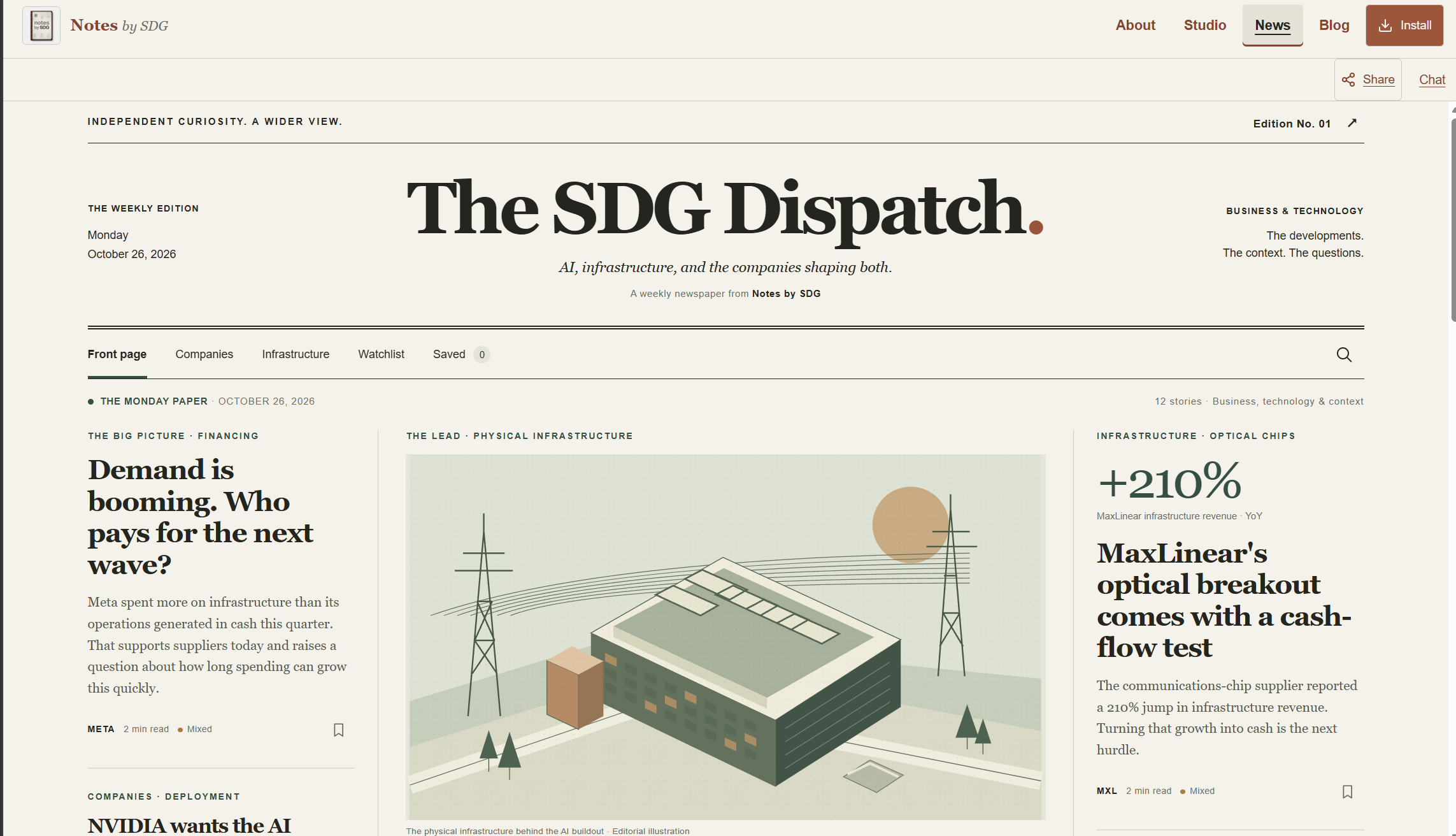
Read The SDG Dispatch — a weekly newspaper from Notes by SDG, covering AI, infrastructure, and the companies shaping both.
This month, I asked an AI assistant to turn a couple of scheduled research digests into a public news site. What came back made me want to sit down and read.
I could look over the headlines, choose a story, open it and then come back to the rest of the edition. It felt like reading a newspaper, with the topics I was interested in already gathered together for me.
I was amazed at how quickly it came together, and how much more readable the research felt in this form. Then I thought about xNoiz, the app I had built last year to help me keep up with all of this.
Last year, I was trying to keep up with AI. I used an AI assistant to explore topics and understand developments, but the useful information kept getting scattered across conversations. Going back to find something meant trying to remember which chat it was in.
I also wanted to follow certain topics regularly and have the research arrive on a schedule, without having to ask for it all over again.
Around the same time, I was learning to build AI applications. Here was a problem I actually had, so I decided to build something for it.
That became xNoiz Digest.
The idea was simple enough: describe what you wanted to follow, set up a digest and have it delivered on a schedule in the app. I also made it available for other people to create digests around their own interests.
Getting there taught me quite a bit.
I had multiple agents handling different parts of the work, from searching for relevant news to writing, editing and reviewing the result. I learned about web tools, precision modes and how the instructions I gave each agent affected what came back.
Then there was the writing itself. Having the news didn’t automatically give me something I wanted to read. I built in multiple passes to make the digests clearer and more readable, with enough context to understand why a development mattered.
I enjoyed figuring all this out. It’s satisfying when something you’ve been piecing together starts doing the job you imagined.
And xNoiz did help. It kept me up to date, surfaced interesting research papers and gave me topics I wanted to dig into further. Some of those explorations fed into my writing. It became part of how I followed AI.
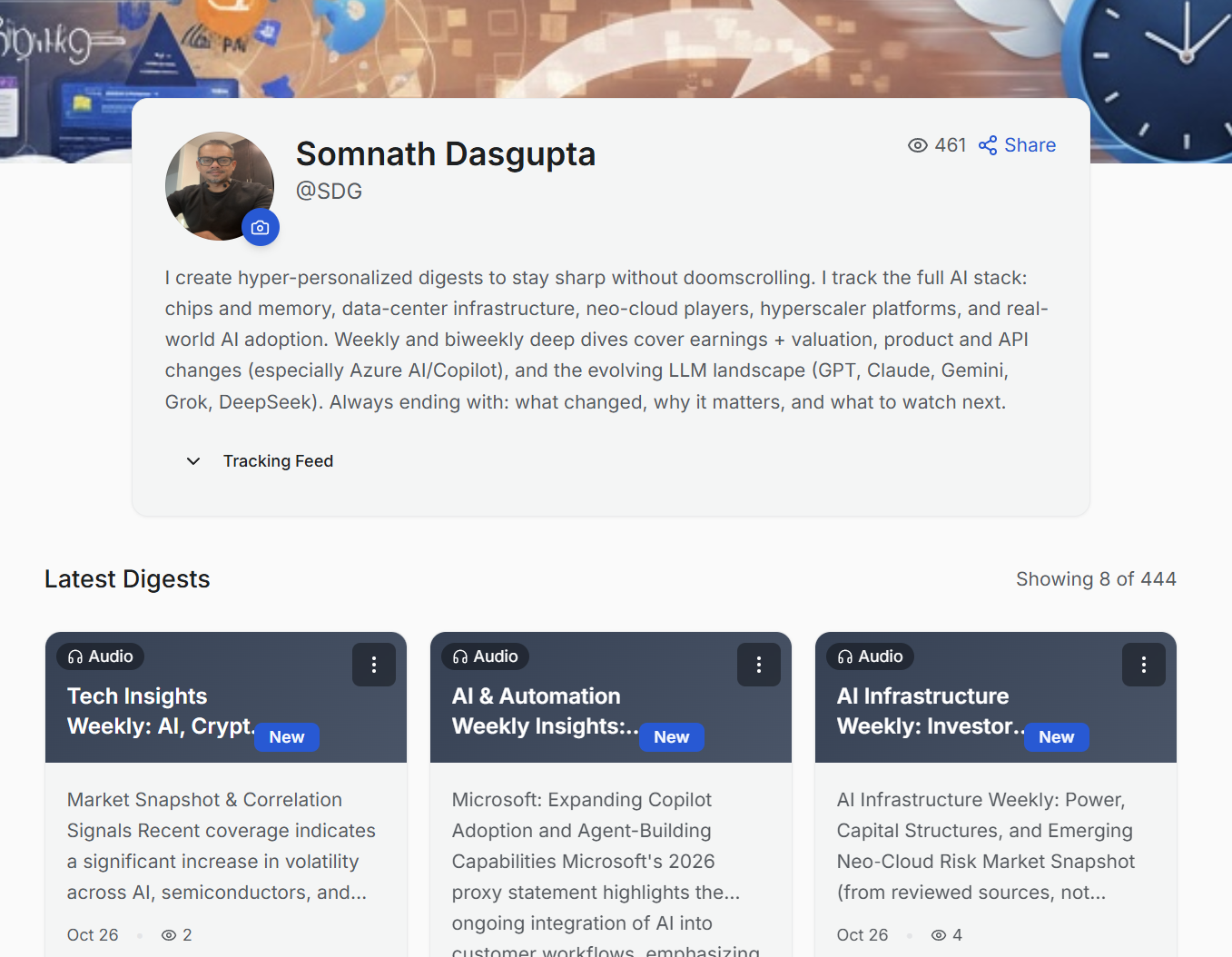
This month, I started using scheduled research tasks in an AI assistant to follow the topics I cared about. With useful information arriving regularly, I could focus on making it easier to read and share. I brought that research together in a newspaper-style site, with headlines I could browse and articles I could open and read. I was surprised by how quickly the experience came together, and decided to make it public.
That was the basic process. The part I hadn’t expected was how much difference the reading experience would make.
On the site, I could glance over the edition and see what caught my attention. A headline could pull me into a story. I could read that article properly, then return to the paper and choose another. I didn’t feel I had to work through the whole research output in one go.
That’s what I like about reading a newspaper. You can browse for a few minutes or settle into something longer. You have a sense of what’s there, and you decide where to spend your time.
This gave me that feeling. A weekly paper about the things I was already trying to follow.
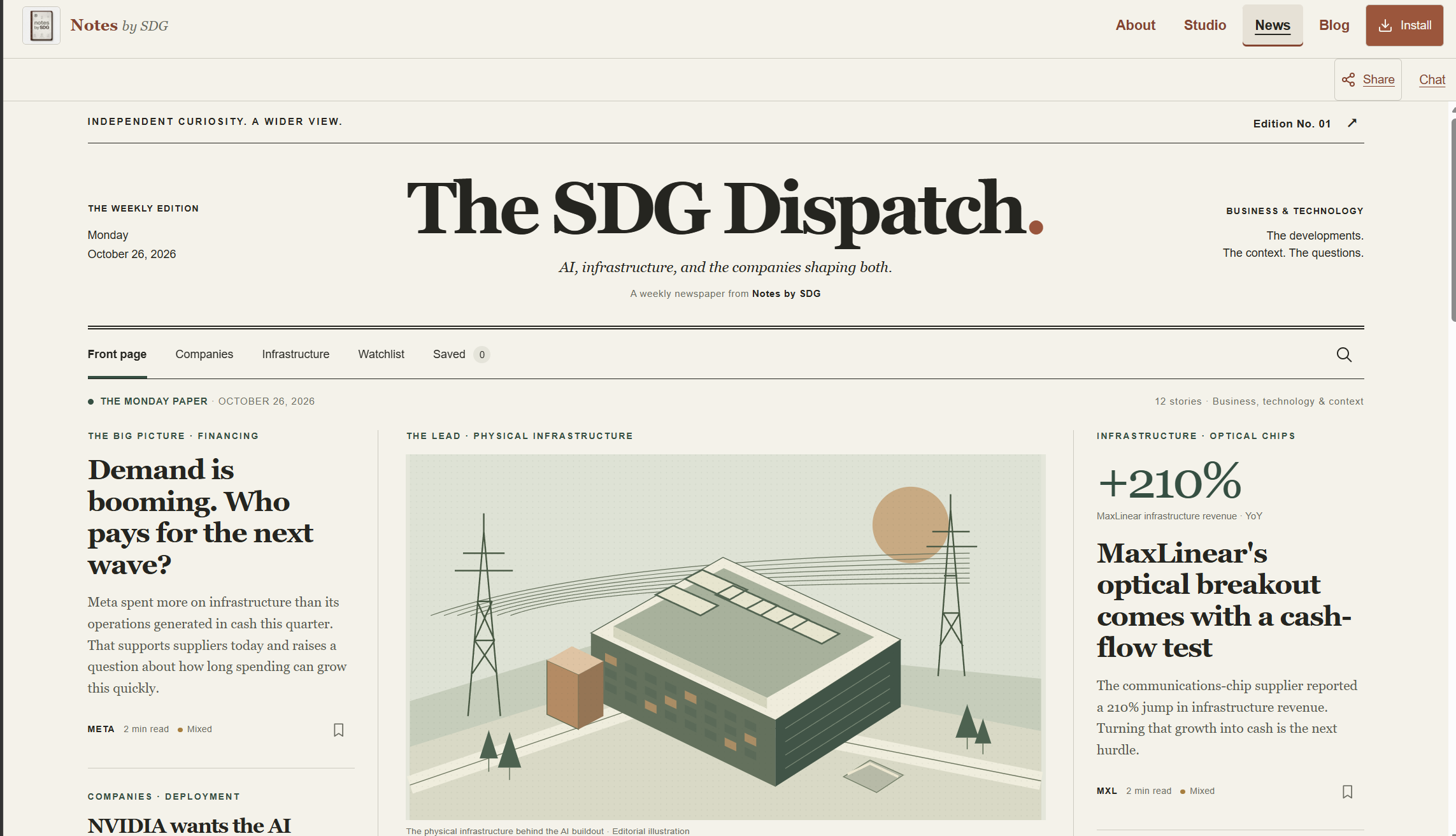
I kept thinking about how quickly it had gone from a request to something this readable. The tool had made design choices that helped me find my way through the information. That felt like a useful step forward from simply getting a good answer.
And it was public. I could send someone a link and let them browse it for themselves.
A few friends wanted regular access, so I have embedded the weekly paper, The SDG Dispatch, in Notes by SDG and will give friends a way to subscribe to future editions.
I wanted an easier way to read my research, and I ended up with something I was excited to show people.
I read about AI progress all the time. Here, I could see what that progress meant for something I had personally built. The amount of work I needed to put together myself had changed. The tool could help gather the research, design a way to read it and turn it into something I could share.
Last year, I approached my problem by building an application. This month, I could describe much of the experience I wanted and have the tool put it together.
That is a fairly big change to encounter in your own workflow.
It also makes the decisions around building more interesting. A capability that gives you a good reason to create an app today may become readily available in the tools people already use. You can keep improving your app and still find that the reason you needed it has changed.
There are still differences here. xNoiz lets people create personalized digests. The weekly paper will share the topics I’m following with readers who want to follow along. A public page doesn’t replace every feature of a separate product.
But enough of my own need is being met differently that I have to reconsider where I spend my time.
Which is slightly harder when you’re attached to what you built.
I remember working through the agents, the searches and the review passes. I remember why I added things. I’ve used the results. Looking at xNoiz, I see all of that effort as well as the app itself.
At the same time, I’m excited by how easily this new approach came together. I want to use it. I want to see how the weekly paper develops and whether friends find it useful enough to keep reading.
So yes, I’m leaning towards sunsetting xNoiz.
I’m glad I built it. That experience helps me judge the research I receive now, spot where the writing needs work and ask better questions about the sources. I would have missed a lot of that learning if I had waited for a more convenient tool to arrive.
What stays with me is how much the new format changed my reaction to the research. I already had useful information arriving regularly. Now I have a paper I want to open, browse and share with friends.
I’m looking forward to seeing the next edition of The SDG Dispatch come together. I’ll probably start the way I would with any newspaper: look over the headlines and see what catches my eye.